For hospitality
Standardise cocktail recipes across your bar team
A house recipe carries the character of the bar. Give colleagues enough detail to reproduce the intended serve, then make the current version easy to recognise.
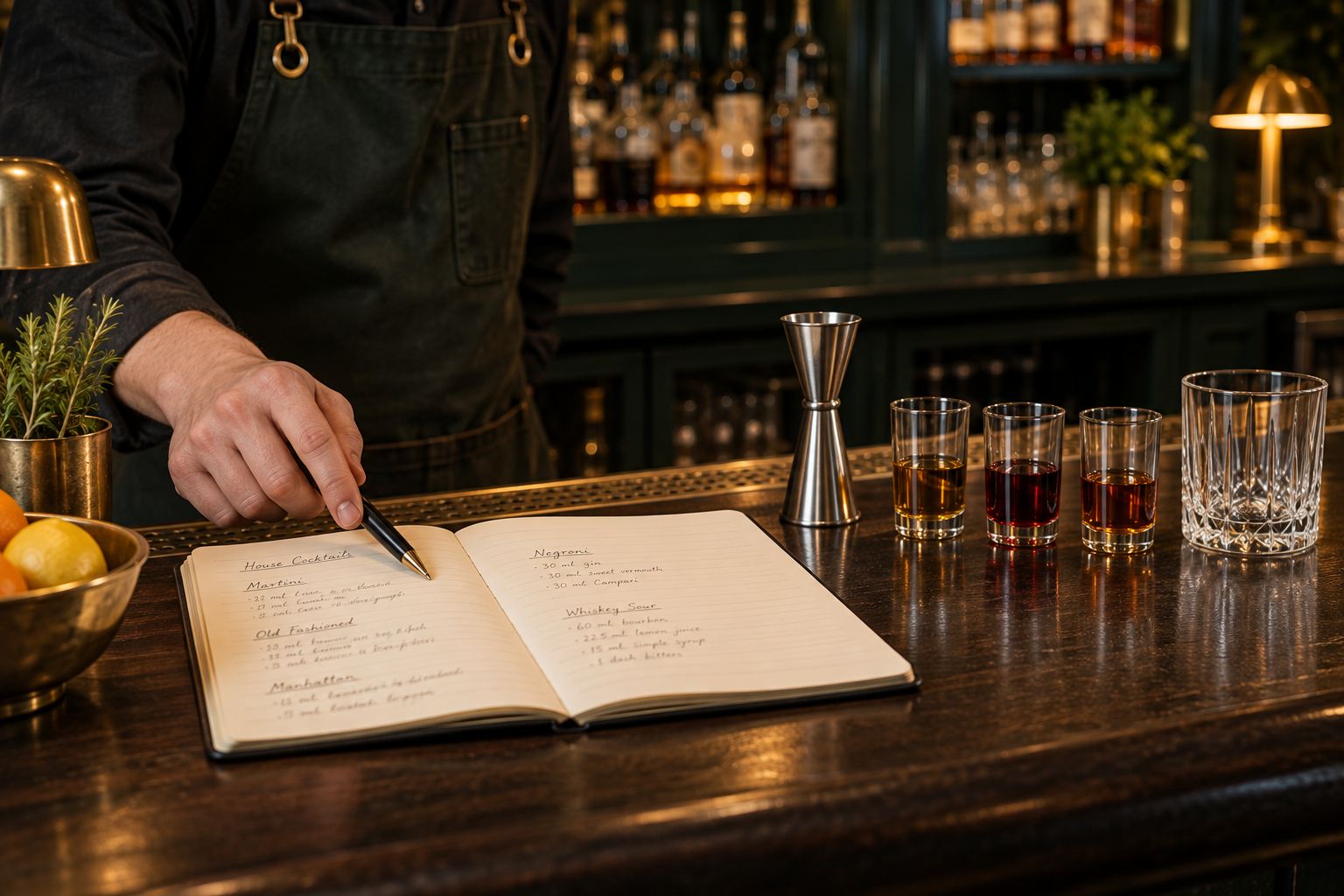
Write down the decisions that otherwise live in memory
“The usual way” depends on who is behind the bar. A specification should resolve choices someone would otherwise have to guess: which vermouth, which measure, whether the garnish is expressed or simply placed, and how the finished serve should look.
Use one unit system consistently. Record actual products where their differences matter, and check guest-relevant information against the products used. Give alcohol-free specifications the same attention.
A completed house-specification example
Example house specification: a Negroni using IBA proportions and method, with house product choices and a completed record.
- Drink / reference
- Negroni / N-01.
- Named ingredients
- 30 ml Beefeater London Dry Gin; 30 ml Campari; 30 ml Martini Rosso sweet red vermouth.
- Method
- Add the measured ingredients to a chilled old fashioned glass containing ice. Stir gently.
- Glass
- Chilled old fashioned glass.
- Ice
- Cubed ice in the serving glass.
- Garnish
- Half an orange slice, placed in the glass.
- Presentation reference
- Written reference: the drink is served over cubed ice in the specified glass, with the half-slice visible. Attach the venue’s own approved reference photograph after a trial serve.
- Approved substitutions
- None. Pause and seek review if a specified product is unavailable.
- Guest information
- Describe the specified ingredients; consult current product information for dietary questions.
- Reviewer
- Shift lead.
- Revision
- 1.0.
- Effective date
- 6 October 2026.
- Recipe source
- International Bartenders Association, Negroni.
Copyable house-specification template
Download the blank house specification.
The copied template includes the copyright and reuse notice.
Drink name / reference:
Ingredients — exact product, quantity and unit:
Method — steps in order:
Glassware:
Ice — preparation and service:
Garnish — including placement or expression:
Presentation reference — written description / approved photograph:
Approved substitutions — or none:
Guest information — checked against current products:
Recipe source / credit:
Reviewer:
Revision:
Effective date:
Change from previous version:

Test the handover as well as the drink
Ask another colleague to prepare the drink using the written specification. Each question identifies something the card may need to explain. Check the resulting serve together, then revise and repeat where necessary.
For example, a colleague might ask whether a citrus garnish should be expressed over the drink or placed directly in the glass. Agree the intended action, write it into the method and update the presentation reference.
Keep recipe testing and document review connected. A clear instruction can still describe a serve the team has not agreed is right for the house.
Make approved changes visible
Choose who may approve changes and where the current specification is kept. Record what changed and when it applies, remove outdated working copies and brief colleagues who take orders as well as those making drinks.
Before service, confirm that the available ingredients support the current specification. If something is missing, an unrecorded substitution should not become a second house recipe by accident.
Specification handover checklist
- Another colleague can follow the measures, method and presentation without guessing.
- Guest information matches the products actually used.
- A reviewer has agreed changes and replaced outdated copies.
- The service team knows what changed and when it applies.
Use the pre-service checklist for opening readiness, and menu availability guide when a shortage changes what you can offer.
Discuss a hospitality pilot
Bring a specification and a service question to a hospitality pilot discussion. Establish what the product would need to demonstrate for your team.